More than half of fatal drowning among 5 to 12-year-olds takes place in natural bodies of water like lakes and rivers. Most drowning deaths in this age group take place while the child is playing near the water or swimming. In Ontario, data suggests that elementary school-age children from 5 to 12 years of age face a lower risk of drowning when compared to other stages of life. Fatal drowning among 5 to 12-year-olds tends to involve children who were “in” the water, as opposed to toddlers who tend to be “near” the water and fall in.
Recent Ontario data suggests that over half of children who drowned were non-swimmers. Similarly, 1 in 4 were alone and another 1 in 4 were with other minors with no adult present.
:::
Drowning prevention tips
Learn to swim.
Learning to swim is the best way to prepare for unexpected falls into water. Parents should register their children in swimming lessons so that they learn how to be safe in, on, and around the water while they are young. Research suggests that most non-swimmers do not take swimming lessons as adults, so learning how to swim while young provides lifelong safety benefits.
In its Swim to Survive® Standard, the Lifesaving Society defines the minimum standard of basic swimming skill for Canadians: roll into deep water, tread water for one minute, and swim 50 metres. These are the essential minimum skills required to survive an unexpected fall into deep water.
The Lifesaving Society's Swim and Lifesaving programs offer a wide range of aquatic training well beyond the Swim to Survive basics.
:::
Swim in supervised areas.
Parents should ensure their children swim only at lifeguarded pools and beaches, and under direct adult supervision at the cottage or in the backyard. Adult supervision is always required, even when swimming in a lifeguarded area.
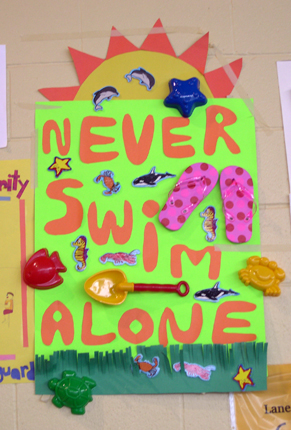
Children should learn to stay away from the water until adult supervision is present. Almost half of all drowning deaths among children occurred when there was no adult present.
Wear your lifejacket.
Most fatal drowning happens when the individual does not intend to be in the water. For example, boaters don’t plan to fall overboard. Ninety per cent of fatal drowning associated with recreational boating involved people who were not wearing lifejackets. Putting on your lifejacket when you get into a boat should become as normal as putting on your seatbelt when you get into the car. Everyone, regardless of age or swimming ability, should wear a lifejacket while boating.
Beware of ice.
There are many fun activities that take place on the ice. However, ice is never completely safe and it is important to learn how to avoid unsafe ice. Never go on the ice alone; a buddy may be able to rescue you or go for help if you get into difficulty. Be sure to measure clear, hard ice in several places. Keep away from unfamiliar paths, areas where there is moving water, and unknown ice. Before you leave shore, make sure others know where you are going and when you plan to be back. Learn more about ice safety here.