Most drowning victims among under 5-year-olds are 2 to 4-year-olds.
Toddlers are very active. They are curious about the world around them, and their ability to move around improves quickly. Toddlers don’t know about the dangers of water and can easily get into trouble. The data shows that the most common activity of toddlers who die from drowning is playing near water and falling in.
Private pools or natural waters like lakes or streams that are accessible from the backyard are danger zones for young children. Private backyard pools account for almost half of water-related deaths for children under the age of 5 years.
In Ontario, the most recent data shows that all fatal drowning among children under the age of 5 years involved absent or distracted adult supervision. Leaving a child without supervision for even a few moments can be fatal.
Drowning prevention tips
If you're not within arms' reach, you've gone too far.
Drowning is a silent killer and can happen in seconds. Even in shallow water, parents and caregivers must be near (within arms' reach) their children whenever they are near water - in the backyard, at the beach, and in the bathroom. Stay tub-side until the water is drained and children are out of the tub. Most bathtub drownings occur because children are left alone "just for a moment."
Restrict and control access to the water.
Many toddlers who drown accessed areas with water while they were unsupervised. Usually, they get through a door or a gate that was left unlocked unintentionally. Layers of protection will reduce the chance of human error. If you can't eliminate the water hazard, restrict access to it by fencing off natural or man-made bodies of water on your property and install gates that are self-closing and self-latching. Drain bathtubs fully when they aren’t being used. Empty unattended kiddie pools and buckets of water and turn them upside down so that they can’t fill with rain water.
Designate a backyard pool lifeguard.
An adult must always supervise children using a pool. All types of pools require supervision, including in-ground, above-ground and wading/kiddie pools. If one adult must be absent for a moment, make sure another adult is ready to take over supervision, or clear and close the pool until supervision can resume.
:::
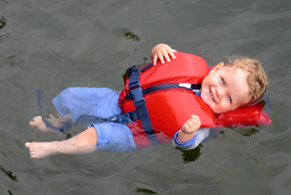
Wear a lifejacket.
As an extra layer of protection, put toddlers in a lifejacket when they are near water. Lifejackets do not replace attentive supervision, but will keep a toddler at the surface - which may give parents/caregivers the seconds they need to save a life. Be a role model for children by wearing your lifejacket, too. Everyone should wear their lifejackets while on the dock, on the boat, and playing near water.
Go to lifeguard supervised beaches and pools.
For safer play near the water, take children to beaches and pools supervised by certified lifeguards. Lifeguards do not replace direct parental supervision but act as an extra layer of protection. Lifeguard-supervised settings will also have all the safety equipment needed to respond in emergency situations.
Parent & Tot aquatic programs.
A positive introduction to water can give your child a lifetime of pleasure in swimming. Toddlers are particularly suited to get used to the water with their parents in an instructional setting. Consider joining a swimming program such as Parent & Tot with your child to learn more about how you and your family can stay safe in, on, and around the water.
Infant "self-rescue" swimming lessons are not recommended or supported by the Lifesaving Society
Online buzz around these types of swimming courses, intended to "safeguard" infants against drowning, have no scientific research backing them.
Drowning can happen regardless of how comfortable your child or infant is in the water. The most effective way to keep your child safe is to keep them within arms’ reach, prevent them from accessing water unattended, and always actively supervise them while they are in, on, or around the water.
Research from the Canadian Pediatric Society explains: "There is no evidence that swimming lessons prevent drowning or near drowning in this age group (two to four years of age). Although it may be possible to teach young infants basic motor skills for water, infants cannot be expected to learn the elements of water safety or to react appropriately in emergencies. No young child, particularly those who are preschool aged, can ever be considered water safe."
The Lifesaving Society supports swimming lessons for pre-school aged children that promote water safety aimed at parents, develop basic motor skills for children and familiarize children with the water. The Lifesaving Society does not support swimming lessons that imply an infant or child will be "drown-proofed."
Drowning is the second leading cause of accidental death for children under the age of five. This age group also face a high risk of experiencing non-fatal drowning. In most of fatal or non-fatal drowning incidents, there was a momentary lack of adult supervision. Drowning is preventable. Parents and caregivers can keep children safe by taking the following actions:
- Restrict and control access to water so that children can’t be around the water alone.
- Install four-sided, self-latching fencing around backyard pools to keep children away from the water while unsupervised.
- Stay within arms' reach of children and keep your eyes on the child at all times when near the water.
- Drain bathtubs, close and latch toilet seats, and remove standing water (e.g., buckets or kiddie pools).
- Ensure children who cannot swim wear a lifejacket while swimming.
- Everyone should wear a lifejacket while boating. Act as a role model and wear your lifejacket while around the water and while boating.
- Remain vigilant about water safety, no matter how good a swimmer you or your children are.